
11 Best Compliance Management Tools for 2025
Getting Started
Navigating the complex web of regulations, from GDPR and HIPAA to SOC 2 and ISO 27001, is a significant challenge for any organization. Manual tracking using spreadsheets and disconnected documents creates information silos, increases the risk of human error, and makes audit preparation a resource-intensive nightmare. The core problem isn't just adhering to rules; it's about demonstrating adherence efficiently and continuously. Before diving into solutions, it's helpful to recognize the bureaucratic aspects of compliance that can drain resources if not managed properly.
This is where compliance management tools become indispensable. These platforms centralize control evidence, automate workflows, and provide a single source of truth for your entire compliance posture. They transform a reactive, often chaotic process into a proactive and streamlined program.
This comprehensive guide will help you find the right solution for your specific needs. We will analyze the leading compliance management tools available, breaking down:
- Key Features: What makes each tool unique.
- Practical Use Cases: Who benefits most from each platform.
- Honest Limitations: Where each tool might fall short.
- Implementation Insights: What to expect when getting started.
Our goal is to provide a direct, no-nonsense comparison to help you move beyond manual compliance management and select a tool that truly fits your operational requirements and strategic goals.
1. AuditBoard
AuditBoard stands out as a top-tier platform for teams seeking to elevate their audit, risk, and compliance functions from siloed, spreadsheet-driven processes into a unified, collaborative system. It excels at connecting traditionally separate GRC (Governance, Risk, and Compliance) activities, making it one of the most cohesive compliance management tools available. The platform integrates internal audit, Sarbanes-Oxley (SOX) compliance, risk management, and IT security compliance into a single source of truth, directly addressing the common pain point of fragmented data and redundant efforts.
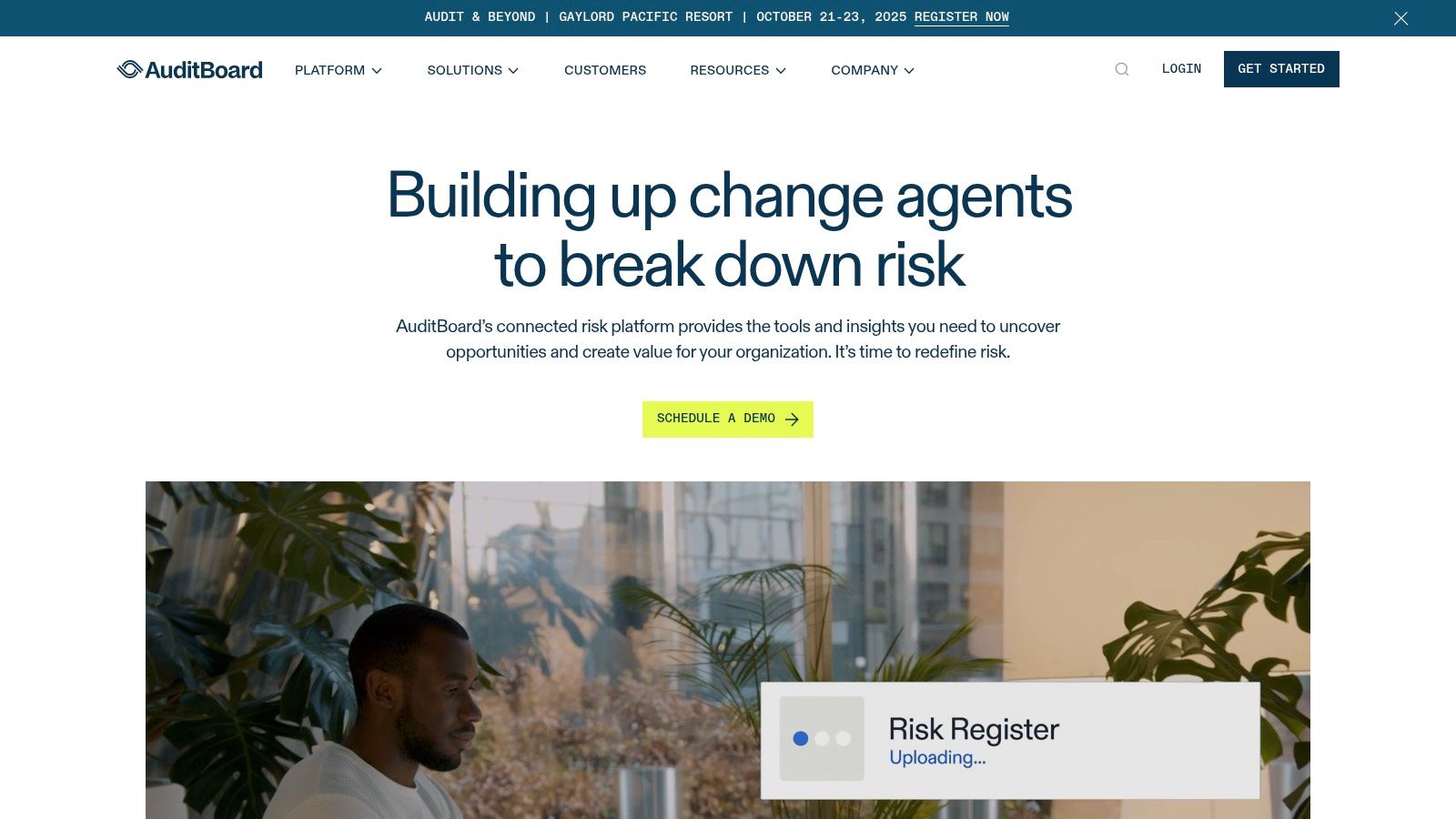
Its real-time dashboards provide immediate visibility into risk landscapes and audit progress, empowering leaders to make informed decisions swiftly. For organizations grappling with multiple regulatory frameworks like GDPR, SOC 2, and ISO 27001, AuditBoard’s cross-framework mapping is a significant time-saver, allowing you to test a control once and apply the evidence across numerous requirements.
Use Case and Implementation
Best For: Mid-size to large enterprises in highly regulated industries like finance, healthcare, and technology that need to manage multiple, overlapping compliance frameworks and mature their internal audit programs.
Implementation is a guided process, but its success hinges on clear internal planning. Before rollout, organizations should map their existing control frameworks and identify key stakeholders from audit, IT, and legal teams. This upfront work streamlines the data migration and configuration process, reducing the time to value. The platform’s ability to produce detailed audit trails and evidence-backed reports is particularly valuable. For those looking to structure their findings, you can see examples in this compliance report template.
Pros and Cons
| Pros | Cons |
|---|---|
| Intuitive Interface: High user adoption rate | Cost: Pricing can be prohibitive for smaller businesses |
| Strong Collaboration: Connects disparate teams | Implementation Time: Can be lengthy for complex setups |
| Scalable: Supports growing GRC programs |
Website: https://www.auditboard.com/
2. LogicGate Risk Cloud
LogicGate Risk Cloud excels with its highly flexible, no-code architecture, making it a standout choice among compliance management tools for organizations with unique or evolving process needs. It empowers risk and compliance teams to design, automate, and deploy their own GRC applications without relying on developer resources. This approach allows businesses to move beyond rigid, off-the-shelf solutions and build workflows that precisely match their internal policies, risk appetites, and regulatory landscapes.
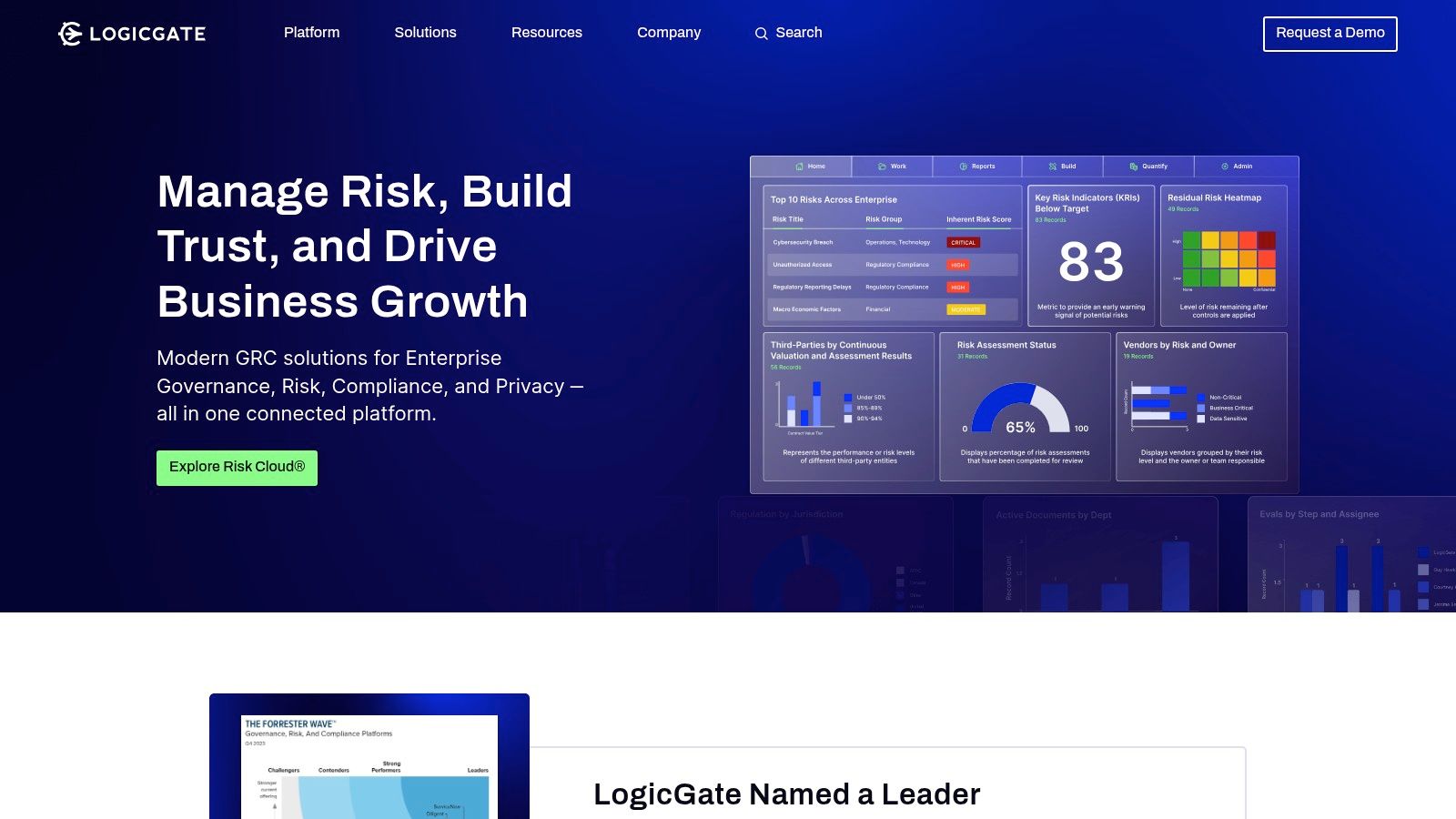
The platform’s strength lies in its ability to connect disparate risk and compliance activities, from policy management and third-party risk to incident response, in a single, interconnected environment. Its real-time dashboards and automated reporting capabilities provide clear visibility into compliance posture, helping teams identify and remediate issues proactively.
Use Case and Implementation
Best For: Fast-growing tech companies and dynamic organizations that require an agile and customizable GRC platform that can adapt to rapid changes in business processes and regulatory requirements.
Successful implementation requires a clear vision of the desired workflows. Before building, teams should map out their specific compliance processes, identify key data inputs, and define the automation logic. While the no-code builder is intuitive, investing time upfront in process design is crucial for maximizing the platform's value. LogicGate's pre-built application templates can serve as a great starting point, which can then be tailored to fit specific organizational needs.
Pros and Cons
| Pros | Cons |
|---|---|
| Highly Flexible: No-code builder adapts to any process | Initial Setup Time: Customization can be time-consuming |
| User-Friendly: Accessible for non-technical users | Learning Curve: Advanced features require some training |
| Scalable: Grows with your business needs |
Website: https://www.logicgate.com/
3. ServiceNow GRC
ServiceNow GRC leverages its powerful platform-as-a-service foundation to integrate governance, risk, and compliance activities directly into an organization's daily IT and business workflows. Its core strength lies in its ability to connect risk and compliance data to the underlying operational assets and processes managed within ServiceNow. This transforms compliance from a periodic, checklist-driven exercise into a continuous, automated function, making it one of the most operationally integrated compliance management tools for large enterprises.
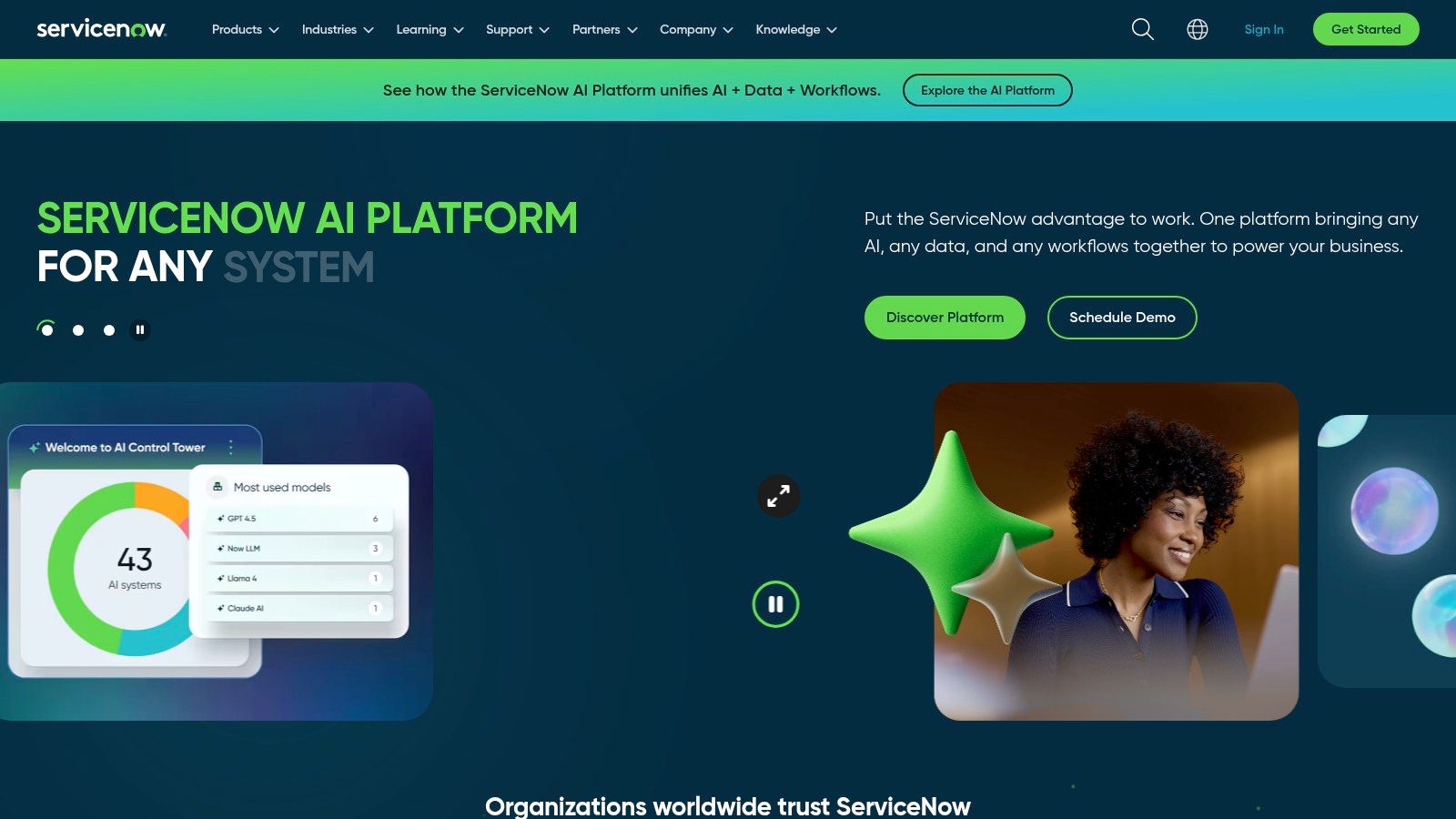
The platform excels at real-time monitoring by pulling data from IT service management (ITSM), security information and event management (SIEM), and other operational systems. This allows for automated evidence collection and the immediate identification of non-compliant configurations or activities. By centralizing policy, control, and risk data, it provides a comprehensive view that is particularly powerful for managing IT-centric regulations and standards.
Use Case and Implementation
Best For: Large enterprises already invested in the ServiceNow ecosystem that need to automate IT compliance and embed risk management directly into their operational processes and technology infrastructure.
Successful implementation requires a mature IT organization and a clear understanding of how GRC processes will map to existing ServiceNow modules like ITSM or Security Operations. Organizations should start by defining their risk and control frameworks within the platform, then incrementally build automated workflows. Leveraging its native capabilities is also key to managing third-party risks; you can get more information on building a robust strategy by reading about vendor risk management.
Pros and Cons
| Pros | Cons |
|---|---|
| Seamless Integration: Native to the ServiceNow platform | High Cost: Pricing model is geared toward large enterprises |
| Strong Automation: Automates evidence and risk data | Implementation Complexity: Requires specialized expertise |
| Comprehensive IT Coverage: Deep visibility into IT risk |
Website: https://www.servicenow.com/
4. OneTrust
OneTrust has cemented its position as a market leader by focusing intensely on the interconnected worlds of privacy, security, and data governance. It provides a highly specialized suite of compliance management tools designed to help organizations navigate the complex web of global data privacy regulations like GDPR and CCPA. The platform’s core strength lies in its ability to automate data discovery and classification, creating a real-time inventory of personal data that serves as the foundation for all compliance activities.
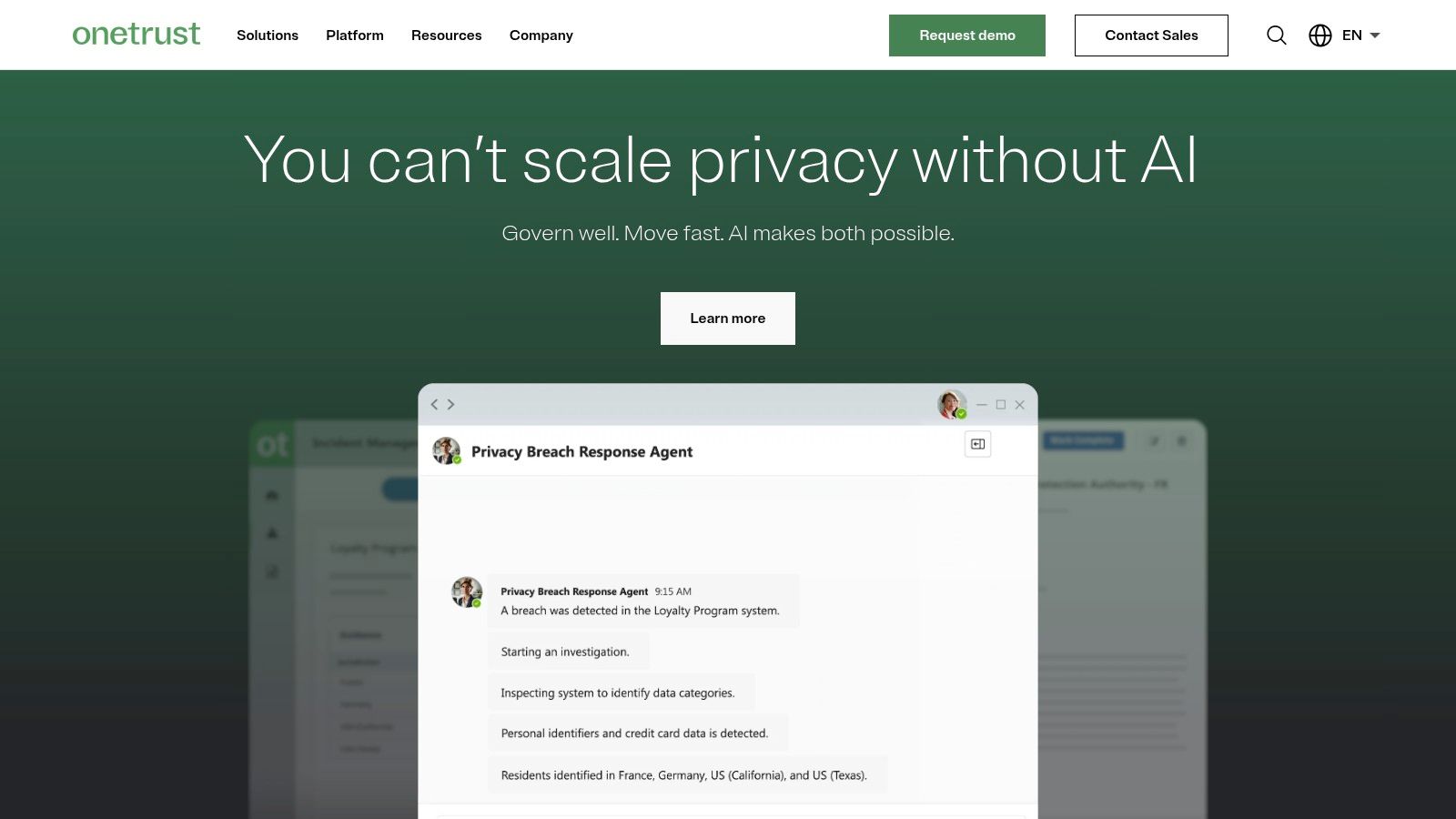
From managing consumer consent and preferences to conducting Privacy Impact Assessments (PIAs), OneTrust offers purpose-built modules that address specific regulatory demands. Its integrated regulatory research database is a key differentiator, providing teams with up-to-date guidance and alerts on changing laws, which is critical for maintaining a proactive compliance posture. This comprehensive approach is essential for any modern business handling customer information. You can explore more about navigating these complexities and achieving data privacy compliance.
Use Case and Implementation
Best For: Global organizations of all sizes that handle significant volumes of personal data and must comply with multiple, often conflicting, international privacy laws.
Successful implementation requires a cross-functional team involving legal, IT, and marketing to map data flows and define consent policies. The initial setup can be intensive, particularly the data mapping and inventory process. However, once configured, the platform's automated workflows for handling data subject access requests (DSARs) and managing vendor risk assessments significantly reduce manual effort and operational friction.
Pros and Cons
| Pros | Cons |
|---|---|
| Extensive Regulatory Coverage: Leader in privacy | Overwhelming for Small Teams: Comprehensive features can be complex |
| User-Friendly Interface: Customizable dashboards | Pricing: Can be high for smaller businesses |
| Strong Community & Resources: Excellent support |
Website: https://www.onetrust.com/
5. Hyperproof
Hyperproof establishes itself as a powerful compliance operations platform designed to help organizations transition from ad-hoc, manual compliance efforts to a state of perpetual audit readiness. Its core strength lies in automating evidence collection and centralizing control management, making it one of the most practical compliance management tools for tech-savvy teams. The platform excels at simplifying the complex process of managing multiple frameworks by mapping controls across standards like SOC 2, ISO 27001, and HIPAA, reducing redundant testing and documentation.
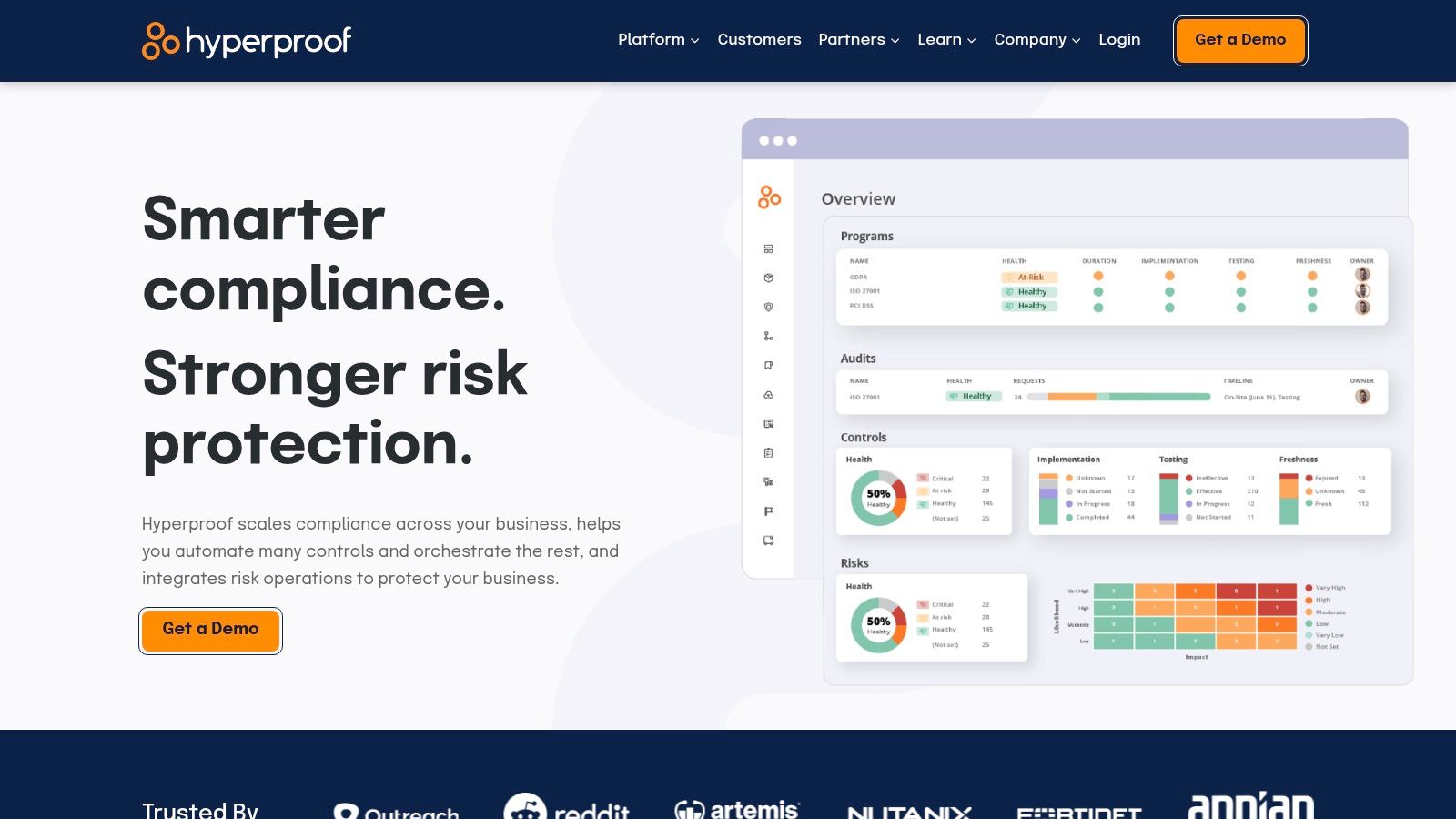
It directly tackles the operational burdens of compliance through automated reminders, task assignments, and integrations that pull evidence from cloud services and business applications. This continuous monitoring capability ensures that your compliance posture is always up-to-date, not just at audit time. This focus on operational efficiency empowers teams to maintain compliance without disrupting their primary business functions, making it a pragmatic choice for fast-moving companies.
Use Case and Implementation
Best For: Fast-growing technology companies, particularly SaaS and cloud-native businesses, that need to efficiently manage multiple security and privacy frameworks and maintain continuous compliance.
Successful implementation requires identifying key integration points from the start. Before deployment, map out which systems, like Jira, Slack, or AWS, hold your compliance evidence. Configuring these connections early allows you to leverage Hyperproof’s automation features immediately. The platform's intuitive task management and collaboration tools make it easy to assign control ownership across departments, ensuring accountability and streamlining communication with auditors.
Pros and Cons
| Pros | Cons |
|---|---|
| Excellent Automation: Streamlines evidence collection | Cost: Can be a significant investment for smaller startups |
| Intuitive Interface: High user adoption rates | Implementation: Can be time-consuming for complex setups |
| Strong Collaboration: Connects disparate team members |
Website: https://hyperproof.io/
6. Vanta
Vanta has carved out a niche as the go-to compliance automation platform, particularly for technology companies and startups aiming to achieve security certifications like SOC 2, ISO 27001, and HIPAA. It shines by automating the often tedious process of evidence collection and continuous monitoring. Vanta integrates directly with an organization's cloud infrastructure, HR systems, and developer tools to pull the necessary data, turning a manual, months-long effort into a streamlined, software-driven workflow. This makes it one of the most efficient compliance management tools for fast-moving businesses.
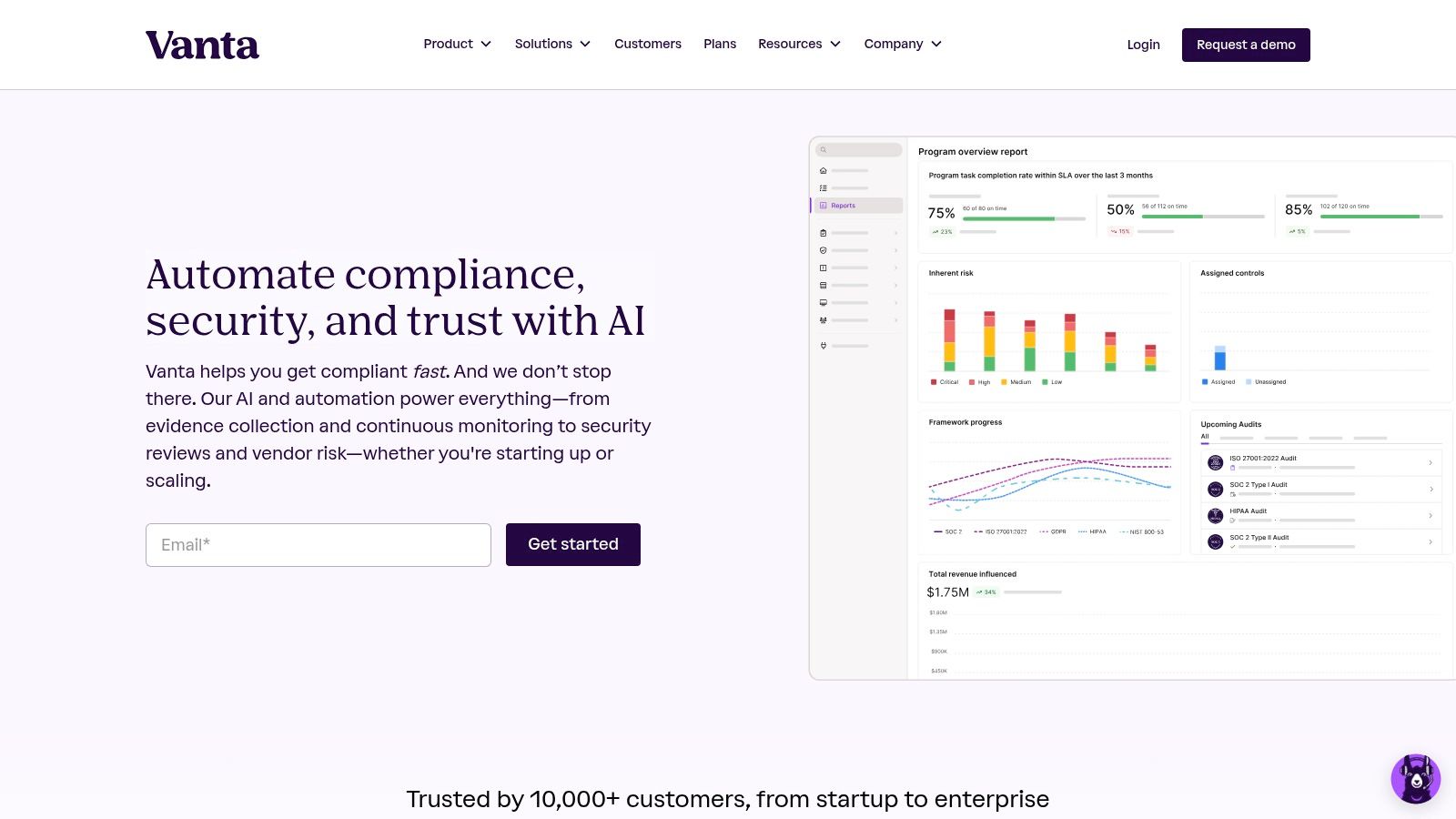
The platform offers pre-built policy templates that serve as a strong starting point for companies building their security programs from the ground up. Its continuous monitoring system provides real-time alerts when a system or process falls out of compliance, allowing teams to address gaps before they become major audit findings. This proactive approach helps maintain a constant state of audit readiness, rather than scrambling before an assessment.
Use Case and Implementation
Best For: Startups and mid-market tech companies, especially SaaS providers, that need to quickly achieve and maintain security certifications to close enterprise deals and build customer trust.
Implementation is notably straightforward. The process begins by connecting Vanta to your cloud services (like AWS, GCP, Azure), identity providers (like Okta, Google Workspace), and other key systems. The platform then runs automated checks against your chosen framework and presents a clear list of compliance gaps. For teams new to this, conducting a preliminary security risk assessment can help prioritize which controls to address first, making the Vanta-guided remediation process even smoother.
Pros and Cons
| Pros | Cons |
|---|---|
| Rapid Setup: Intuitive experience with minimal setup time | Framework Scope: May not cover all niche compliance frameworks |
| Extensive Integrations: Connects with hundreds of tools | Cost: Can be expensive for very early-stage startups |
| Reduces Manual Effort: Automates evidence collection |
Website: https://www.vanta.com/
7. Drata
Drata has carved out a significant niche as a compliance automation platform focused on helping technology companies, particularly startups and SaaS businesses, achieve and maintain security certifications. Its core strength lies in its "security and compliance as code" approach, which automates evidence collection by integrating directly with a company's cloud stack (like AWS, GCP, Azure) and SaaS tools. This makes it one of the most efficient compliance management tools for engineering-driven organizations aiming for certifications like SOC 2, ISO 27001, and HIPAA.
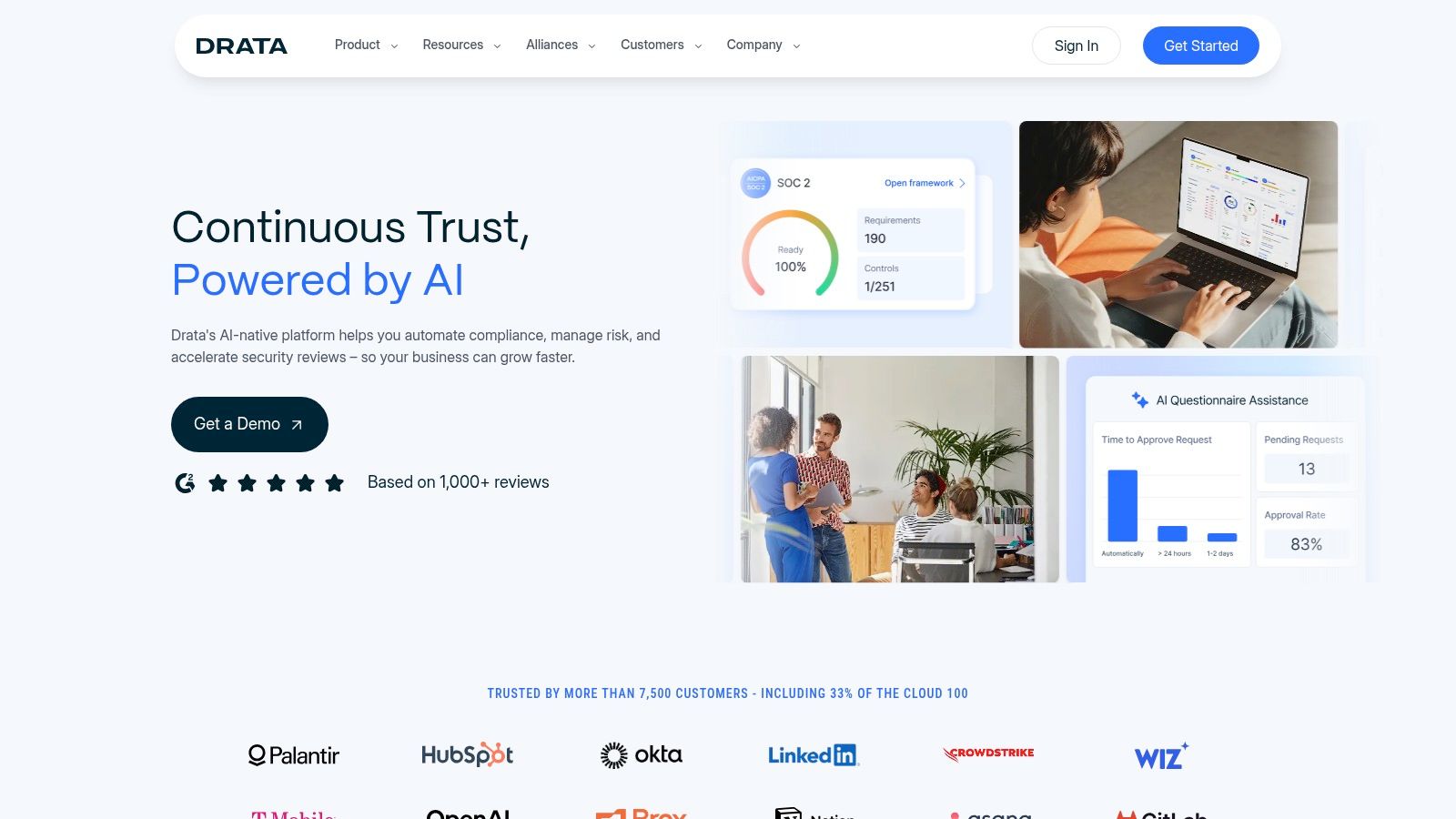
The platform’s continuous control monitoring provides real-time visibility into your compliance posture, shifting security from a periodic, frantic audit preparation cycle to an ongoing, automated process. By offering pre-built policy templates and guided workflows, Drata significantly lowers the barrier to entry for companies navigating their first major audit, turning a complex process into a manageable, step-by-step journey.
Use Case and Implementation
Best For: Tech startups and mid-market SaaS companies that need to achieve SOC 2 or ISO 27001 certification quickly to meet enterprise customer requirements and close deals.
Implementation with Drata is typically rapid. The process begins with connecting your cloud providers, identity providers, and other key SaaS applications. The platform then automatically maps your existing configurations against the chosen framework's controls, identifying gaps immediately. Success depends on having a dedicated internal owner who can work with engineering and HR to remediate flagged issues and customize the provided policy templates to fit the organization’s specific operations.
Pros and Cons
| Pros | Cons |
|---|---|
| Accelerates Audits: Greatly speeds up SOC 2 | Niche Focus: Less comprehensive for non-tech frameworks |
| User-Friendly: Guided workflows are intuitive | Pricing: Can be a significant cost for early-stage startups |
| Strong Integrations: Connects to dev & cloud tools |
Website: https://drata.com/
8. MetricStream
MetricStream positions itself as a powerhouse in the GRC space, offering a deeply integrated platform designed for large, global enterprises navigating complex regulatory landscapes. It excels at unifying traditionally separate functions like compliance, risk, audit, and even third-party management into a single, cohesive system. This makes it one of the most comprehensive compliance management tools for organizations aiming to achieve a holistic view of their risk and compliance posture. The platform’s strength lies in its ability to manage a vast web of regulations, policies, and controls.
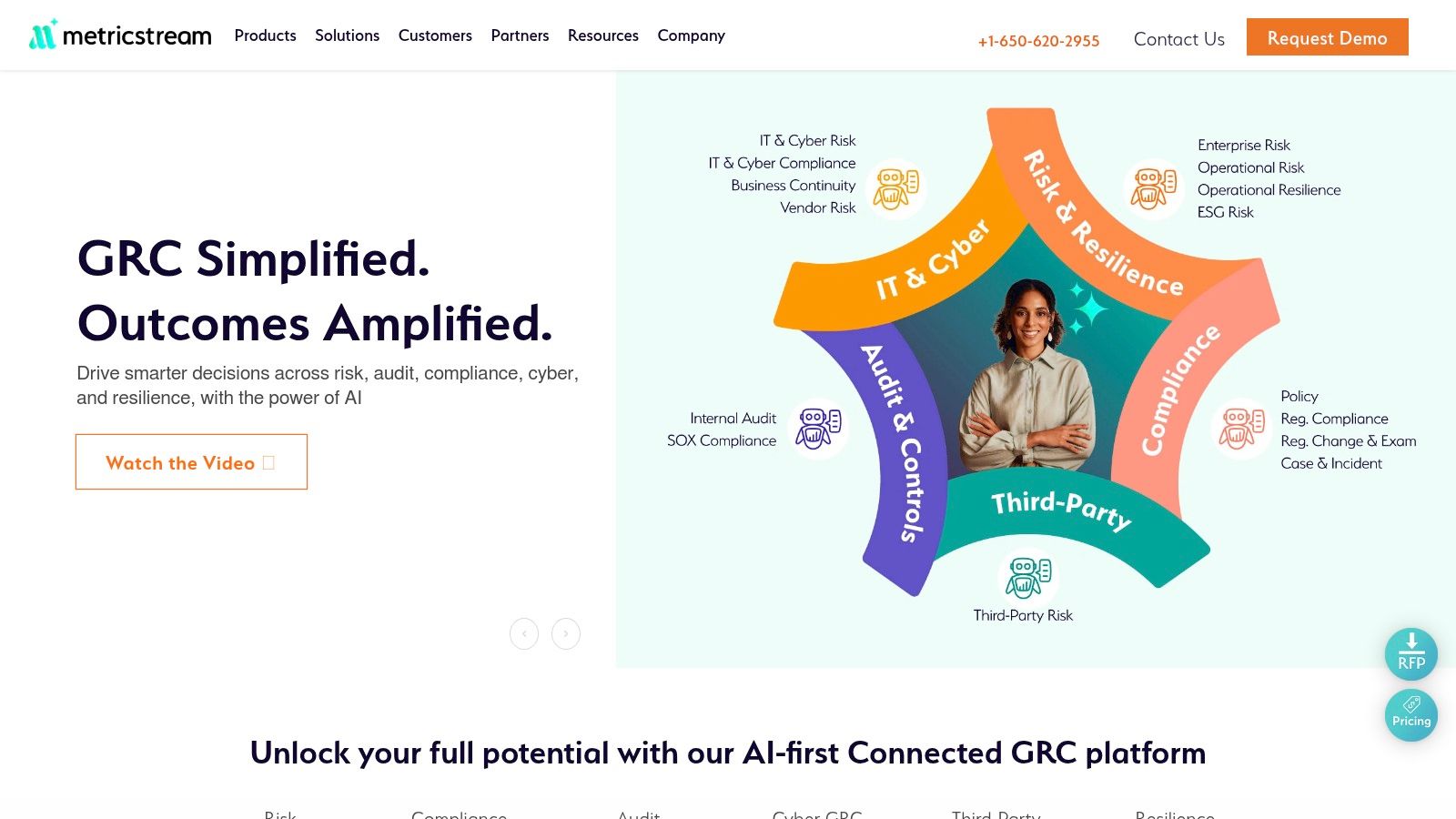
MetricStream’s platform is built on modular "apps," allowing businesses to select the functionalities they need, from policy and document management to issue tracking and regulatory engagement. Its automated workflows for control assessments and risk monitoring help reduce the manual burden on compliance teams. The tool’s advanced analytics and reporting capabilities are particularly valuable for leadership, providing detailed insights into compliance effectiveness and emerging risk trends across the entire organization.
Use Case and Implementation
Best For: Large, multinational corporations in sectors like banking, energy, and life sciences that require a highly configurable and scalable GRC solution to manage a multitude of international regulations and internal policies.
Implementation is a significant undertaking that demands dedicated project management and cross-departmental buy-in. Success hinges on a phased rollout, starting with a core module like policy management before expanding into more complex areas like risk and audit. Organizations must invest heavily in defining their GRC taxonomies, control hierarchies, and workflow rules upfront. The platform's high degree of customization is a key benefit, but it requires skilled administrators to configure and maintain effectively.
Pros and Cons
| Pros | Cons |
|---|---|
| Comprehensive GRC Coverage: Unifies all GRC aspects | High Cost: Significant investment in licensing and setup |
| Highly Scalable: Built for global enterprises | Implementation Complexity: Can be resource-intensive and long |
| Strong Analytics: Powerful reporting capabilities |
Website: https://www.metricstream.com/
9. Archer
Archer is a highly configurable GRC platform designed for organizations that require deep customization to align with complex, specific business processes. It stands out for its flexibility, allowing teams to build and adapt workflows without writing code. This makes it one of the most powerful compliance management tools for large enterprises looking to integrate IT risk, operational risk, audit, and regulatory tracking into a single, cohesive governance framework. Its strength lies in its ability to be molded to unique internal policies and external regulations.
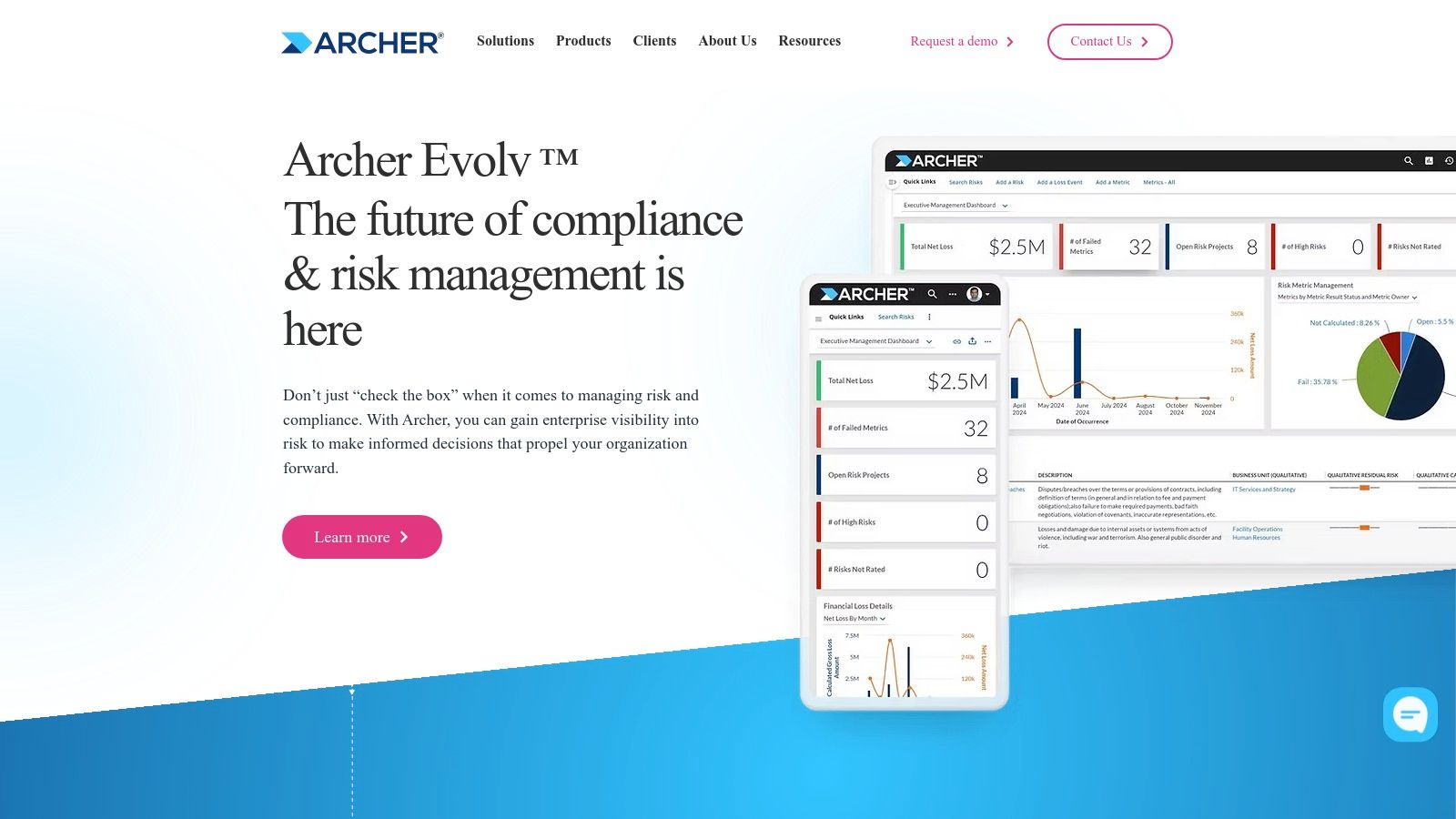
The platform supports a vast array of compliance activities, from policy management and risk assessments to handling deficiencies and managing third-party risk. Archer’s approach enables a top-down view of compliance posture, helping leaders connect individual control failures to broader business impacts. This capability is crucial for mature organizations aiming to quantify risk and prioritize remediation efforts based on strategic importance rather than just regulatory checklists.
Use Case and Implementation
Best For: Large enterprises and government agencies with mature GRC programs and unique compliance needs that cannot be met by off-the-shelf solutions. Ideal for organizations that have the resources for a more involved implementation.
Implementation of Archer is a significant project that demands dedicated resources and a clear strategy. Success often depends on having an experienced implementation partner or a skilled in-house team. Before starting, organizations must thoroughly document their existing risk and control frameworks, as well as the custom workflows they intend to build. This detailed planning is essential to leverage the platform's customization capabilities effectively and avoid a protracted rollout.
Pros and Cons
| Pros | Cons |
|---|---|
| Highly customizable: Adapts to unique business needs | Complex implementation: Resource and time-intensive |
| Scalable: Built for large, complex enterprises | Higher cost: Can be prohibitive for small to mid-size firms |
| Strong community support: Extensive user resources |
Website: https://www.archerirm.com/
10. Secureframe
Secureframe positions itself as an all-in-one compliance automation platform, specifically designed to help businesses, particularly tech startups and cloud-native companies, achieve and maintain rigorous security certifications. It streamlines the path to standards like SOC 2, ISO 27001, HIPAA, and GDPR by replacing manual, spreadsheet-based tracking with automated evidence collection and continuous monitoring. The platform directly integrates with over 100 cloud services, HR systems, and developer tools, automatically gathering proof that controls are operating effectively.
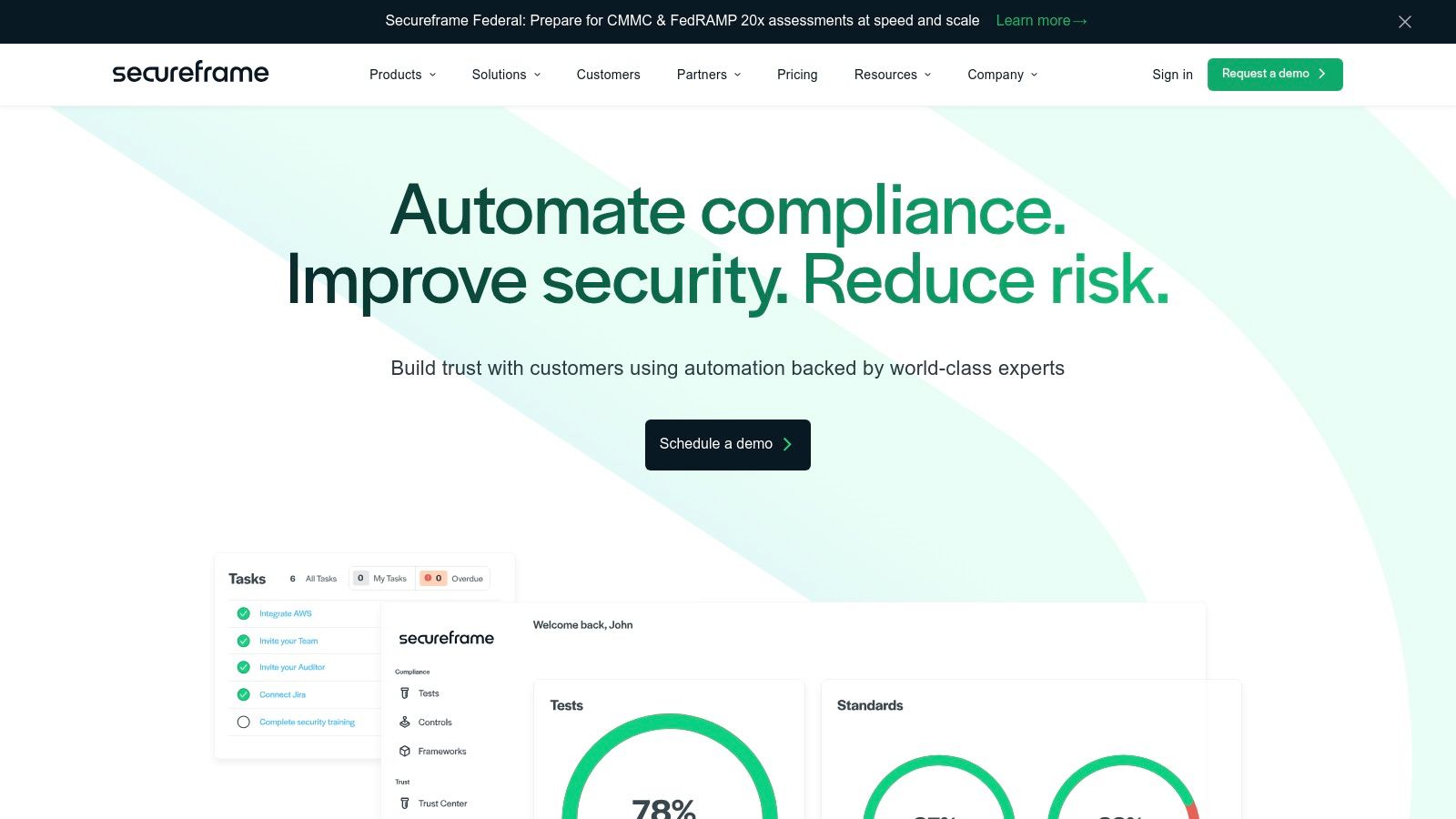
This automated approach makes it one of the most efficient compliance management tools for organizations needing to demonstrate security posture to customers quickly. Its real-time dashboards provide a clear view of compliance status, flagging non-conformities before they become major issues. The platform also offers a library of pre-built, auditor-approved policy templates, significantly reducing the administrative burden of documentation. The guided workflows are a key benefit, walking teams through the entire process from readiness assessment to audit. This focus on automation can be further explored by understanding the principles of document workflow automation.
Use Case and Implementation
Best For: Tech companies, SaaS providers, and startups that need to achieve compliance certifications like SOC 2 or ISO 27001 quickly to unblock sales deals and build customer trust.
Implementation with Secureframe is designed to be fast. The process starts by connecting your tech stack (AWS, Google Cloud, GitHub, etc.) to the platform, which then performs an initial scan to identify compliance gaps. From there, users follow guided tasks to remediate issues, adopt policy templates, and complete readiness questionnaires. Success depends on having engineering and IT resources available to configure integrations and address technical control gaps identified by the system.
Pros and Cons
| Pros | Cons |
|---|---|
| Accelerates Certification: Speeds up audit readiness | Cost: Can be a significant expense for very small startups |
| Strong Integrations: Automates evidence collection | Framework Coverage: May not cover niche or industry-specific regulations |
| Guided Workflows: Very user-friendly for new teams |
Website: https://secureframe.com/
11. ZenGRC
ZenGRC by LogicGate positions itself as a nimble and highly configurable platform for organizations looking to streamline their GRC processes without the heavy lift often associated with enterprise solutions. It excels in providing a "single source of truth" for risk and compliance activities, making it one of the more accessible compliance management tools for teams moving beyond spreadsheets. The platform is designed to manage controls, policies, risks, and audits in one centralized location, simplifying adherence to frameworks like GDPR, SOC 2, and HIPAA.
Its core strength lies in workflow automation. ZenGRC allows teams to build no-code workflows that automate evidence collection, task assignments, and review cycles, which significantly reduces the manual burden on compliance managers. This focus on automation ensures that compliance processes are not only documented but are actively and consistently executed across the organization, providing clear audit trails for regulators.
Use Case and Implementation
Best For: Mid-market companies and enterprises in tech, finance, and healthcare looking for a flexible, workflow-driven GRC platform that can be tailored to specific internal processes without extensive custom development.
Successful implementation requires a clear understanding of your current compliance workflows. Before starting, map out your key processes, such as vendor risk assessment or internal audit cycles. This allows you to leverage ZenGRC’s no-code builder effectively from day one. The platform’s pre-built templates for common regulations provide a solid starting point, but its true value is unlocked when you customize them to fit your organization’s unique operational needs.
Pros and Cons
| Pros | Cons |
|---|---|
| Highly Customizable: Flexible workflow automation | Learning Curve: Customization requires user training |
| Centralized Control: Unified GRC management | Cost: Can be expensive for smaller businesses |
| Strong Reporting: Real-time visibility | Resource Intensive: Setup can demand significant effort |
Website: https://www.logicgate.com/products/zengrc/
Compliance Management Tools Comparison
| Solution | Core Features & Automation ✨ | User Experience & Quality ★★★★☆ | Value & Pricing 💰 | Target Audience 👥 | Unique Selling Points 🏆 |
|---|---|---|---|---|---|
| AuditBoard | Automated audit workflows, risk tracking | User-friendly, collaborative interface | Higher cost, scalable | Mid to large enterprises | Comprehensive multi-framework compliance |
| LogicGate Risk Cloud | No-code workflow builder, real-time risk alerts | Flexible, non-technical user-friendly | Medium to high | Growing businesses, flexible GRC needs | Highly customizable no-code platform |
| ServiceNow GRC | IT risk & policy management, integrated IT tools | Strong support, complex setup | High cost, enterprise-level | Large enterprises, IT-focused | Seamless ITSM and security tools integration |
| OneTrust | Privacy compliance automation, consent management | User-friendly, customizable dashboards | Premium pricing | Organizations focused on privacy laws | Extensive global privacy regulation coverage |
| Hyperproof | Automated evidence collection, perpetual audit prep | User-friendly, real-time collaboration | Higher cost | Multisector enterprises | Continuous audit readiness |
| Vanta | Continuous monitoring, cloud integrations | Intuitive, minimal setup | Medium to high | Startups, tech companies | Fast SOC 2 & ISO automation |
| Drata | Continuous control monitoring, auditor support | Guided workflows, strong support | Medium to high | Tech startups and scaleups | Real-time compliance dashboards |
| MetricStream | Unified GRC suite, automated risk assessments | Strong analytics, complex implementation | High cost | Global enterprises | Comprehensive, modular GRC for complex needs |
| Archer | No-code workflows, risk & audit management | Highly customizable, resource-intensive setup | High cost | Large enterprises | Strong governance framework & third-party risk |
| Secureframe | Automated workflows, continuous monitoring | User-friendly, guided workflows | Medium to high | Tech companies, startups | Fast compliance with cloud integrations |
| ZenGRC | Centralized compliance, automated task management | Not specified | Not specified | Broad compliance needs | Customizable templates, multi-framework support |
Final Thoughts
Navigating the complex landscape of regulatory requirements and internal policies is a formidable challenge. As we've explored, the right suite of compliance management tools is no longer a luxury but a foundational component of a resilient, ethical, and successful organization. From comprehensive GRC platforms like ServiceNow and Archer, ideal for large enterprises with multifaceted risk profiles, to more focused, automation-driven solutions like Vanta and Drata that excel in the tech startup space for SOC 2 and ISO 27001, the market offers a solution for nearly every need.
Our deep dive into tools like AuditBoard, Hyperproof, and LogicGate Risk Cloud has revealed a critical theme: flexibility is paramount. The ability to customize workflows, map controls to multiple frameworks, and generate insightful reports is what separates a passive record-keeping system from an active, strategic compliance partner. These platforms empower teams to move beyond mere box-ticking and transform compliance into a value-driving activity that strengthens security posture and builds stakeholder trust.
Key Takeaways and Your Next Steps
Choosing the best-fit tool requires a clear-eyed assessment of your organization's unique context. Don't be swayed by an exhaustive feature list if you only need a fraction of the functionality. Instead, focus on a strategic approach to your selection process.
Here are actionable steps to guide your decision:
- Define Your Core Problem: Are you drowning in evidence collection for a specific audit like SOC 2? Or do you need a centralized system to manage a dozen different global regulations? Pinpoint your primary pain point first. A tool like Secureframe is built for the former, while MetricStream is designed for the latter.
- Assess Your Team's Maturity: Consider the technical expertise and available resources within your compliance, legal, and IT teams. A powerful but complex tool like ServiceNow GRC requires significant implementation resources, whereas a more intuitive platform like ZenGRC might offer a faster time-to-value for smaller, less specialized teams.
- Prioritize Integration Capabilities: Your compliance tool cannot operate in a vacuum. Evaluate how well a potential solution integrates with your existing tech stack, such as your cloud infrastructure (AWS, Azure), HRIS, and project management software. Strong API support is a non-negotiable for achieving true automation and efficiency.
- Request Live, Use-Case-Specific Demos: Move beyond canned sales presentations. Prepare a list of your specific daily tasks and challenges, and ask vendors to demonstrate exactly how their platform would solve them. This is the best way to cut through marketing claims and assess real-world usability.
Ultimately, implementing one of these powerful compliance management tools is an investment in your organization's future. It’s about building a sustainable, scalable, and defensible compliance program that can adapt to the ever-changing regulatory environment, protecting your reputation and your bottom line.
As you work to document processes and manage sensitive communications within your compliance framework, ensuring secure and private information sharing is crucial. For anonymous, encrypted, and ephemeral text and file sharing, consider a tool like Whisperit. It provides a simple, secure way to handle sensitive notes and evidence without leaving a permanent digital trail. Visit Whisperit to enhance your secure communication protocols.