
10 Case Management Best Practices for 2025
Effective case management is the backbone of any successful legal practice, yet it often becomes a source of significant friction. Juggling client needs, complex documentation, and tight deadlines can quickly lead to disorganized files, communication breakdowns, and administrative overload. The result is a reactive, chaotic workflow where teams spend more time searching for information than strategizing for their clients. This approach not only hampers productivity but also risks compromising the quality of client outcomes. The challenge lies in shifting from a system of constant crisis management to one of proactive, structured control.
This guide is designed to provide that structure. We will explore ten fundamental case management best practices that serve as a blueprint for transforming your legal operations. Each principle is broken down into actionable steps, moving beyond abstract theory to offer tangible strategies you can implement immediately. From creating individualized care plans and leveraging strengths-based approaches to integrating trauma-informed care and adopting technology-enabled workflows, these practices are essential for modern legal professionals.
Throughout this listicle, we will demonstrate how a sophisticated tool like Whisperit, the voice-first AI workspace, can operationalize these best practices. You will see how its features directly support each principle, helping to automate administrative tasks, centralize communication, and provide clear insights into case progress. Our goal is to equip you with a comprehensive understanding of what exemplary case management looks like and provide a clear path to achieving it, ultimately bringing clarity and efficiency to your most complex cases.
1. Individualized Care Planning
Individualized care planning is a cornerstone of effective case management, shifting the focus from a one-size-fits-all model to a person-centered approach. This practice involves developing customized service plans based on each client's unique needs, strengths, goals, and preferences. It emphasizes a collaborative partnership between the case manager, the client, and their support network to create a clear, actionable roadmap for success.
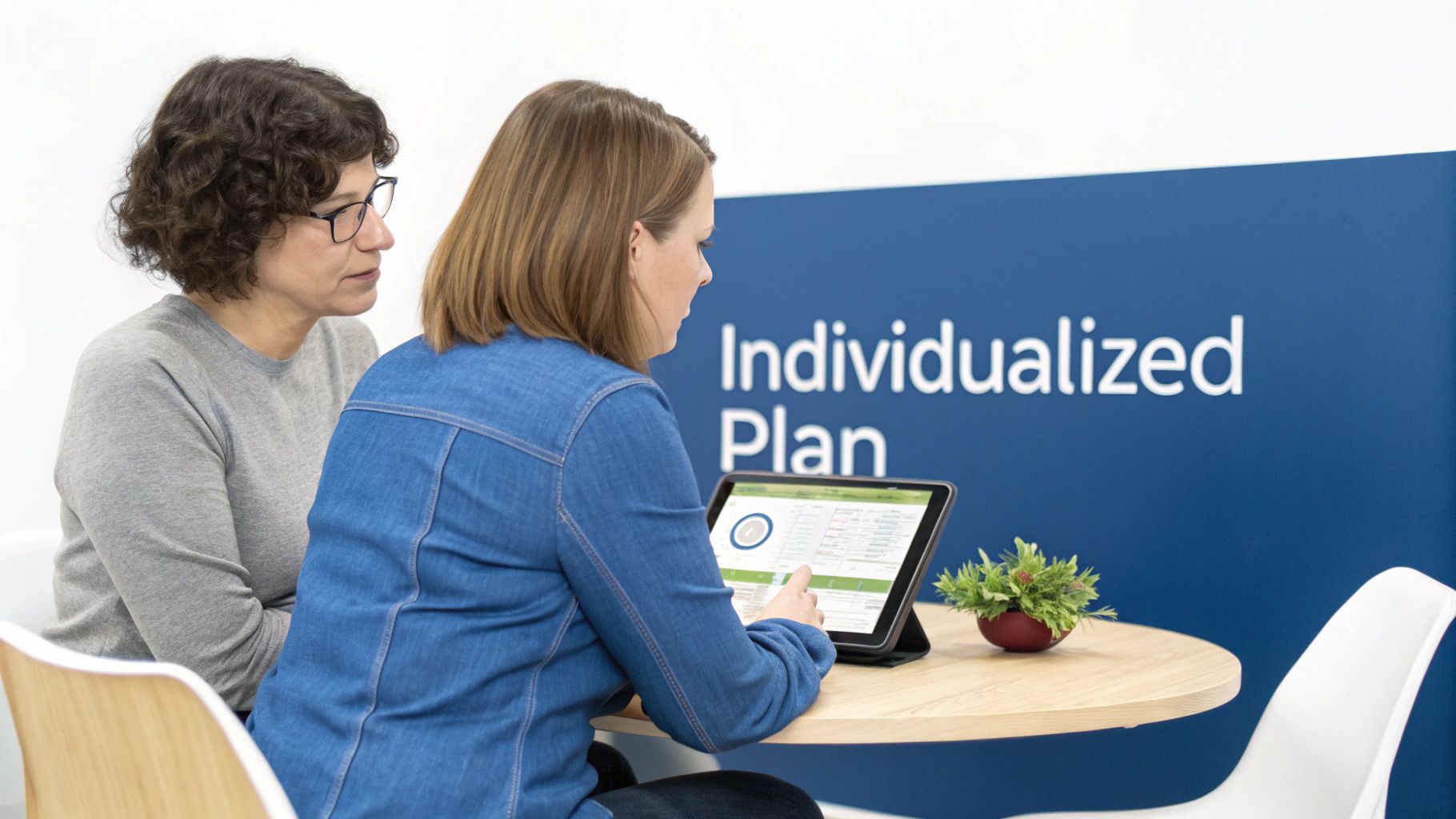
In a healthcare setting, for example, a customized discharge plan for a post-surgery patient considers not just their medical needs but also their home environment, family support, and personal motivation. Similarly, in a legal context, this means crafting a bespoke case strategy that aligns with the client's specific objectives, moving beyond standard procedures to address the unique nuances of their situation. This level of personalization ensures that resources are allocated effectively and that interventions are more likely to achieve the desired outcomes.
How to Implement Individualized Care Planning
Successfully implementing this practice requires a structured approach rooted in deep client understanding. The initial assessment is critical; it must be comprehensive to capture the full picture of the client's situation.
- Conduct Thorough Assessments: Start with a detailed bio-psycho-social assessment. The information gathered during this initial phase forms the foundation of the entire plan. An effective intake process is vital; discover how you can improve your data collection with patient intake form templates.
- Use Motivational Interviewing: Employ techniques that empower clients to identify their own goals and motivations. This fosters a sense of ownership and increases their commitment to the plan.
- Document Everything Clearly: Record client preferences, priorities, and goals in a centralized, accessible location. This ensures consistency across all team members and service providers.
- Schedule Regular Reviews: Plans are not static. Revisit them quarterly or whenever significant life changes occur to ensure they remain relevant and effective.
Key Insight: The most successful care plans are living documents, co-created with the client and adapted over time. This ongoing collaboration is essential for building trust and achieving long-term success, making it a fundamental component of case management best practices.
2. Strengths-Based Case Management
Strengths-based case management represents a fundamental paradigm shift from traditional, deficit-focused models to an approach that emphasizes client capabilities, resilience, and existing resources. Instead of concentrating on problems or what's wrong, this practice identifies and builds upon what clients do well and the assets they already possess. It fosters empowerment by viewing clients as resourceful collaborators in their own success, rather than passive recipients of services.
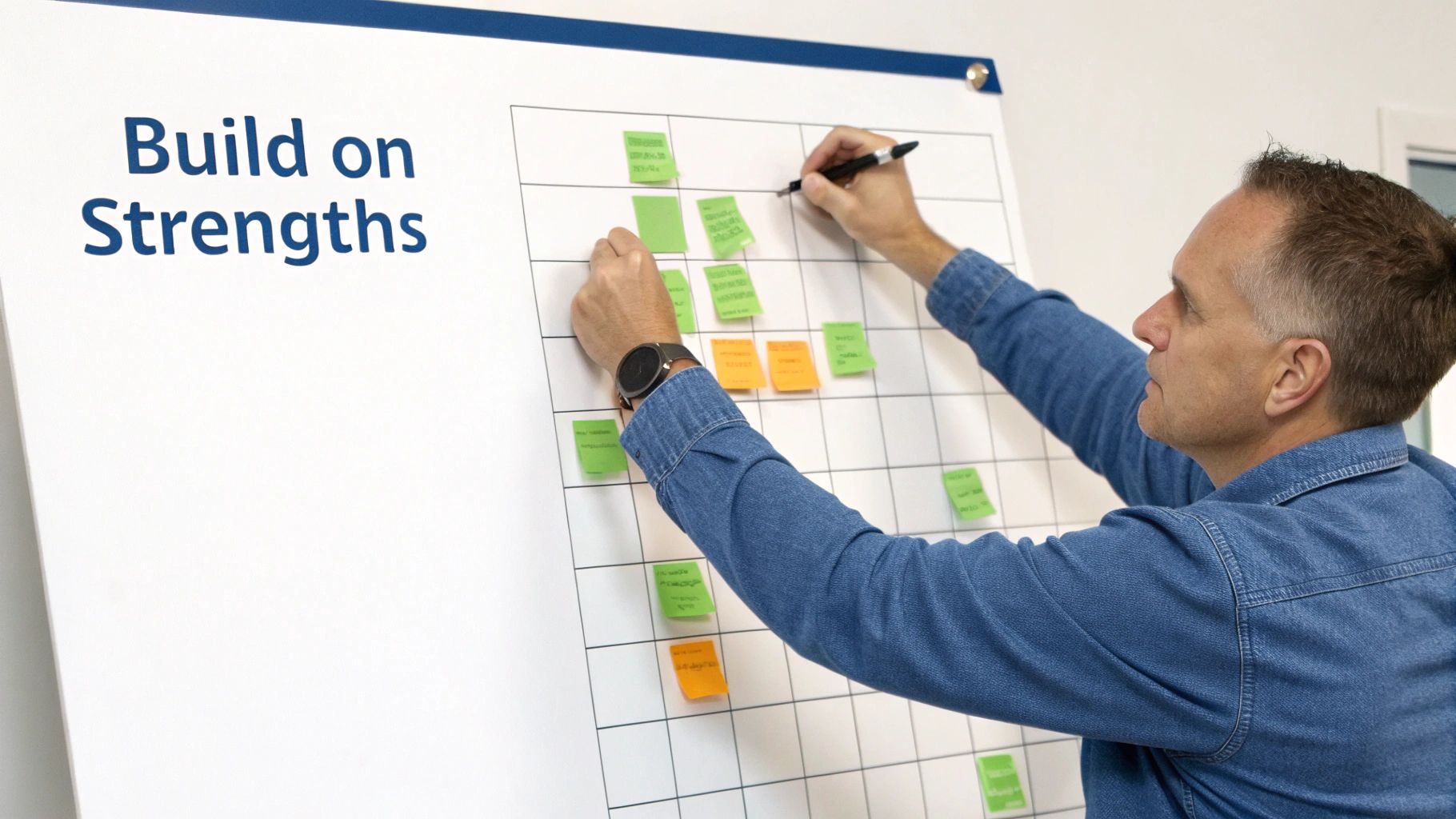
This methodology is transformative across various fields. In recovery-oriented mental health services, it means focusing on a client's coping skills and support networks to build resilience. For workforce development programs, it involves highlighting an individual’s existing talents to find suitable employment, rather than just focusing on their barriers. This asset-based perspective, popularized by pioneers like Dennis Saleebey, helps cultivate hope and motivation, which are critical drivers for lasting change and are integral to effective case management best practices.
How to Implement Strengths-Based Case Management
Adopting a strengths-based approach requires a conscious change in perspective, language, and process. The goal is to co-discover and mobilize internal and external resources with the client.
- Reframe the Conversation: Begin assessments by asking questions like, "What are you good at?" or "Tell me about a time you successfully overcame a challenge." This immediately shifts the focus from deficits to capabilities.
- Map Client and Community Assets: Work with clients to identify their personal strengths, talents, and skills. Extend this mapping to their community, pinpointing supportive people, local groups, and organizations that can serve as resources.
- Use Scaling Questions: To uncover existing competencies, ask questions like, "On a scale of 1 to 10, how confident are you that you can achieve this goal? What makes it a 3 and not a 1?" This helps clients recognize the progress they have already made.
- Document and Celebrate Wins: Meticulously track and acknowledge every small success. Celebrating progress, no matter how minor, reinforces a client's sense of self-efficacy and builds momentum.
Key Insight: A strengths-based approach fundamentally alters the power dynamic, positioning the case manager as a facilitator and ally rather than an expert with all the answers. This collaborative partnership is key to unlocking a client's intrinsic motivation and potential for growth.
3. Care Coordination and Integrated Services
Care coordination and integrated services represent a systematic approach to synchronizing care across multiple providers and systems. This practice is designed to break down silos between healthcare, behavioral health, social services, and other support systems. By organizing client services in a cohesive manner, case managers ensure a seamless experience, delivering comprehensive, non-duplicative care that is fully aligned with the client’s needs and goals.

This model is exemplified in settings like Accountable Care Organizations (ACOs), where medical services are tightly coordinated to improve patient outcomes and reduce costs. Another example is a Housing First program that provides wraparound services, integrating housing support with mental health and substance use treatment. The core principle is to create a unified team that shares information and works collaboratively, preventing the client from having to navigate a fragmented and confusing system on their own.
How to Implement Care Coordination and Integrated Services
Effective coordination hinges on clear communication, shared protocols, and the right technology to connect disparate teams. A well-defined framework ensures all providers are working from the same playbook.
- Establish Clear Protocols: Develop written care coordination agreements and protocols that outline roles, responsibilities, and communication workflows for all involved parties.
- Use Interoperable Technology: Employ a secure, centralized platform that allows different providers to share information safely and efficiently. This creates a single source of truth for each client’s case. You can see how technology streamlines these processes by exploring workflow automation in healthcare.
- Schedule Interdisciplinary Meetings: Hold regular meetings with the entire care team, including the client, to review progress, solve problems, and adjust the care plan as needed.
- Assign a Single Point of Contact: Designate a primary case manager or care coordinator who serves as the client’s main point of contact, simplifying communication and building a trusted relationship.
Key Insight: True care coordination is more than just making referrals; it’s about actively managing the intersections between different services. This proactive management is a critical component of modern case management best practices, ensuring that no client falls through the cracks.
4. Motivational Interviewing (MI) Techniques
Motivational Interviewing (MI) is a client-centered, evidence-based counseling approach that helps case managers elicit and strengthen a client's own motivation for positive behavior change. Instead of prescribing solutions, this practice uses strategic questioning and reflective listening to explore and resolve ambivalence, empowering clients to overcome their own resistance. It is a fundamental technique for fostering a collaborative partnership and is a key element of modern case management best practices.
In substance abuse treatment, for instance, a case manager using MI might help a client explore the discrepancies between their current substance use and their desire to reconnect with family, strengthening their internal drive for sobriety. Similarly, in chronic disease management, this technique can help a patient resolve mixed feelings about medication adherence, leading to better health outcomes. This collaborative spirit transforms the case manager's role from an authority figure to a supportive partner in the client's journey.
How to Implement Motivational Interviewing Techniques
Effective MI is a skill built on a foundation of empathy and genuine curiosity. Rather than pushing for change, the goal is to guide the client toward their own conclusions.
- Adopt the OARS Technique: Structure conversations around Open questions, Affirmations, Reflective listening, and Summaries. This framework encourages clients to talk more and feel heard.
- Avoid the "Righting Reflex": Resist the natural urge to immediately fix a client's problems or tell them what to do. This reflex often creates resistance and shuts down productive dialogue.
- Listen More, Talk Less: Aim for a 70/30 ratio, where the client does the majority of the talking. This ensures the focus remains on their thoughts, feelings, and motivations.
- Amplify "Change Talk": When a client expresses any desire, ability, reason, or need for change, reflect it back to them. This reinforces their own arguments for making a positive shift. Proper documentation is key here; see how you can refine your process with these examples of well-written clinical notes.
Key Insight: Motivational Interviewing is not about convincing clients to change; it's about helping them find their own reasons to do so. By honoring their autonomy and validating their ambivalence, case managers build the trust needed to facilitate meaningful, lasting behavioral shifts.
5. Risk and Protective Factor Assessment
A comprehensive risk and protective factor assessment is a vital component of effective case management. This evidence-based approach involves systematically identifying factors that increase a client's vulnerability (risk factors) and those that promote resilience and well-being (protective factors). By understanding this balance, case managers can develop more targeted, preventative, and strength-based interventions.
This practice moves beyond simply reacting to crises by proactively identifying potential challenges and leveraging existing strengths. For instance, in a child welfare context, a risk assessment might identify parental substance abuse as a risk factor, while a strong extended family network serves as a protective factor. In mental health, this framework helps in creating safety plans by evaluating suicide risk factors alongside protective influences like a strong therapeutic alliance or a stable support system. This balanced view ensures that planning is both realistic and empowering.
How to Implement Risk and Protective Factor Assessment
Implementing this practice requires a structured and dynamic approach to evaluation. The goal is to create a holistic picture of the client's world that informs every stage of the case management process, making it a key element of case management best practices.
- Use Validated Assessment Tools: Employ standardized, evidence-based instruments designed for your specific population, such as the Structured Assessment of Violence Risk in Youth (SAVRY) or child welfare risk assessment models. This ensures objectivity and reliability.
- Involve the Client: Collaborate with clients to identify their own strengths and protective factors. This empowers them and provides deeper insights into their resilience, fostering a sense of ownership over their care plan.
- Consider Cultural and Systemic Factors: Acknowledge that risk and protection are influenced by a client's cultural background, community environment, and systemic barriers. An effective assessment accounts for these broader contexts.
- Update Assessments Regularly: Risk and protective factors are not static. Re-evaluate them periodically, especially after significant life events, to ensure interventions remain relevant and responsive to the client's changing circumstances.
Key Insight: The most effective interventions are not solely focused on mitigating risk but also on actively building and reinforcing protective factors. This dual-focus strategy creates a more sustainable path toward client stability and long-term success.
6. Active Monitoring and Outcomes Tracking
Active monitoring and outcomes tracking is a systematic approach that shifts case management from being activity-focused to results-driven. This practice involves continuously measuring client progress against established goals and evaluating the effectiveness of interventions. It relies on consistent data collection and analysis to provide objective evidence of what is working, allowing for timely adjustments to the care plan.
For instance, a behavioral health program might monitor symptom reduction scores to gauge the impact of therapy, while a workforce development initiative would track employment retention rates. In care coordination, a key metric could be the reduction in hospital readmission rates. By focusing on tangible outcomes, this practice demonstrates accountability, proves the value of services to stakeholders, and ensures that every effort is directly contributing to client success.
How to Implement Active Monitoring and Outcomes Tracking
Effective implementation requires a clear framework for what to measure and how to use the data to inform decisions. The goal is to create a continuous feedback loop that drives improvement.
- Select Key Performance Indicators (KPIs): Identify 3-5 critical outcomes that are directly aligned with your service goals. These should be specific, measurable, and meaningful to both the client and the organization.
- Use Validated Measurement Tools: Employ brief, standardized tools to collect data consistently and reduce the burden on clients and staff. This ensures the information is reliable and comparable over time.
- Establish a Review Cadence: Schedule regular, recurring meetings (e.g., monthly) with clients and providers to review progress dashboards. Use this time to discuss trends, celebrate achievements, and collaboratively solve problems.
- Automate Data Collection: Whenever possible, use technology to automate data gathering and reporting. This minimizes manual effort and provides real-time insights for better decision-making. Learn how tracking outcomes is central to effective healthcare quality improvement initiatives.
Key Insight: Outcomes tracking transforms case management from a series of tasks into a dynamic, evidence-based process. This data-informed approach not only validates the effectiveness of your work but also empowers clients by making their progress visible and celebrating their successes along the way.
7. Cultural Competence and Humility in Practice
Cultural competence and humility represent a foundational commitment to understanding, respecting, and effectively serving clients from diverse backgrounds. This practice moves beyond simple awareness, demanding active self-reflection, a willingness to learn, and an acknowledgment of power dynamics. It recognizes that case managers are perpetual learners who must adapt their skills to meet the unique cultural context of each client, fostering a more equitable and effective service environment.
This approach is vital in settings like refugee resettlement, where culturally adapted services can significantly impact a family's integration and well-being. Similarly, in community health, hiring case managers from the same cultural backgrounds as the client population helps build immediate trust and rapport. By integrating these principles, case management becomes more responsive and respectful, directly improving client engagement and outcomes.
How to Implement Cultural Competence and Humility
Integrating this practice requires a commitment to continuous learning and organizational change. The goal is to embed cultural responsiveness into every aspect of service delivery, making it a core component of high-quality care.
- Engage in Self-Reflection: Regularly examine your own cultural identity, biases, and assumptions. Understanding your own worldview is the first step toward understanding others without judgment.
- Build Community Relationships: Actively connect with cultural community leaders and organizations. These partnerships provide invaluable insights and can serve as a bridge to the populations you serve.
- Prioritize Diverse Hiring: Strive to build a team that reflects the diversity of your client base. Staff who share lived experiences with clients can offer unique perspectives and enhance trust.
- Adapt Communication and Materials: Use professional interpreters for all critical conversations to ensure clear understanding. Translate essential documents and adapt communication styles to respect cultural norms and literacy levels.
Key Insight: Cultural humility is not a destination but a lifelong process of learning and self-reflection. This ongoing commitment is essential for building authentic, trust-based relationships and stands as one of the most critical case management best practices for achieving equitable outcomes.
8. Family-Centered and Kinship-Based Practice
A family-centered and kinship-based practice recognizes the family system as central to a client's wellbeing. This approach shifts the focus from an individual in isolation to the client within their network of relationships, engaging family and kinship members as active partners in assessment, planning, and service delivery. It is built on the understanding that leveraging family strengths and resources is a powerful catalyst for positive, sustainable change.
This model is vital in child welfare, where kinship care programs prioritize placing children with relative guardians to maintain family connections. In behavioral health, wraparound services for youth engage the entire family to create a unified support system. This collaborative approach ensures that interventions are culturally sensitive, holistic, and grounded in the client's most natural support network, making it a cornerstone of modern case management best practices.
How to Implement a Family-Centered Practice
Adopting a family-centered approach requires a deliberate effort to see and engage the client’s entire support system. The goal is to build a partnership with the family, not just provide services to an individual.
- Map Family and Kinship Relationships: During intake, ask about and document important family and kinship connections. Go beyond the immediate household to understand the broader support network.
- Involve Family in Planning: With the client's consent, invite key family members to care planning meetings. This ensures their perspectives and strengths are incorporated into the strategy.
- Assess Family Strengths: Instead of focusing only on deficits, identify and assess the family's inherent strengths, resources, and resilience. Leverage these as foundational elements of the care plan.
- Respect Cultural Norms: Acknowledge and respect diverse cultural definitions of family structure and roles. Tailor your engagement strategies to align with the family's values and communication styles.
- Address Barriers to Participation: Proactively identify and work to resolve barriers that might prevent family involvement, such as transportation issues, work schedules, or interpersonal conflicts.
Key Insight: Treating the family as the unit of service, rather than just the individual, fundamentally enhances the effectiveness of interventions. By empowering the family system, case managers build a stronger, more resilient foundation for long-term client success.
9. Trauma-Informed Case Management
Trauma-informed case management is a fundamental approach that recognizes and responds to the pervasive impact of trauma. This practice shifts the perspective from "What's wrong with you?" to "What happened to you?" It involves integrating knowledge about trauma into all aspects of service delivery to foster safety, trustworthiness, and collaboration, while actively avoiding practices that could inadvertently re-traumatize clients.
This approach is critical in many fields. For example, in refugee resettlement, case managers must understand the trauma of displacement and violence to provide effective support. In child welfare services, recognizing the effects of developmental trauma is essential for creating stable, healing environments. This method ensures that all interactions are grounded in an understanding of a client's life experiences, promoting a more compassionate and effective path to recovery and stability.
How to Implement Trauma-Informed Case Management
Adopting a trauma-informed lens requires a deliberate organizational and individual commitment to safety, empowerment, and healing. It starts with education and creating a secure environment for both clients and staff. To deepen your understanding of this critical approach, exploring the foundational Trauma-Informed Care Principles can provide invaluable insights for your practice.
- Create Safe Environments: Ensure both physical and psychological safety. This includes predictable routines, clear and consistent communication, and a welcoming physical space.
- Prioritize Trustworthiness and Transparency: Build rapport by being consistent, reliable, and clear in all decisions. Explain processes and involve clients in their own care planning.
- Empower Clients with Voice and Choice: Give clients meaningful choices and a voice in their treatment and service plans. This helps restore a sense of control that trauma often takes away.
- Train All Staff: Provide comprehensive training on the impact of trauma, its various presentations, and the principles of trauma-informed care. This fosters a consistent and supportive organizational culture.
Key Insight: A trauma-informed approach is not a specific intervention but a cultural framework. It requires continuous self-reflection and organizational commitment to create a system where clients feel seen, respected, and safe, which is a non-negotiable aspect of modern case management best practices.
10. Technology-Enabled Case Management and Data Management
Strategic use of technology is a critical component of modern case management best practices, transforming how professionals coordinate care and manage data. This involves leveraging tools like case management software, electronic health records (EHRs), and data analytics to boost efficiency, improve coordination, and enable evidence-based decision-making. By automating workflows and centralizing information, technology empowers case managers to focus more on client relationships and complex problem-solving.
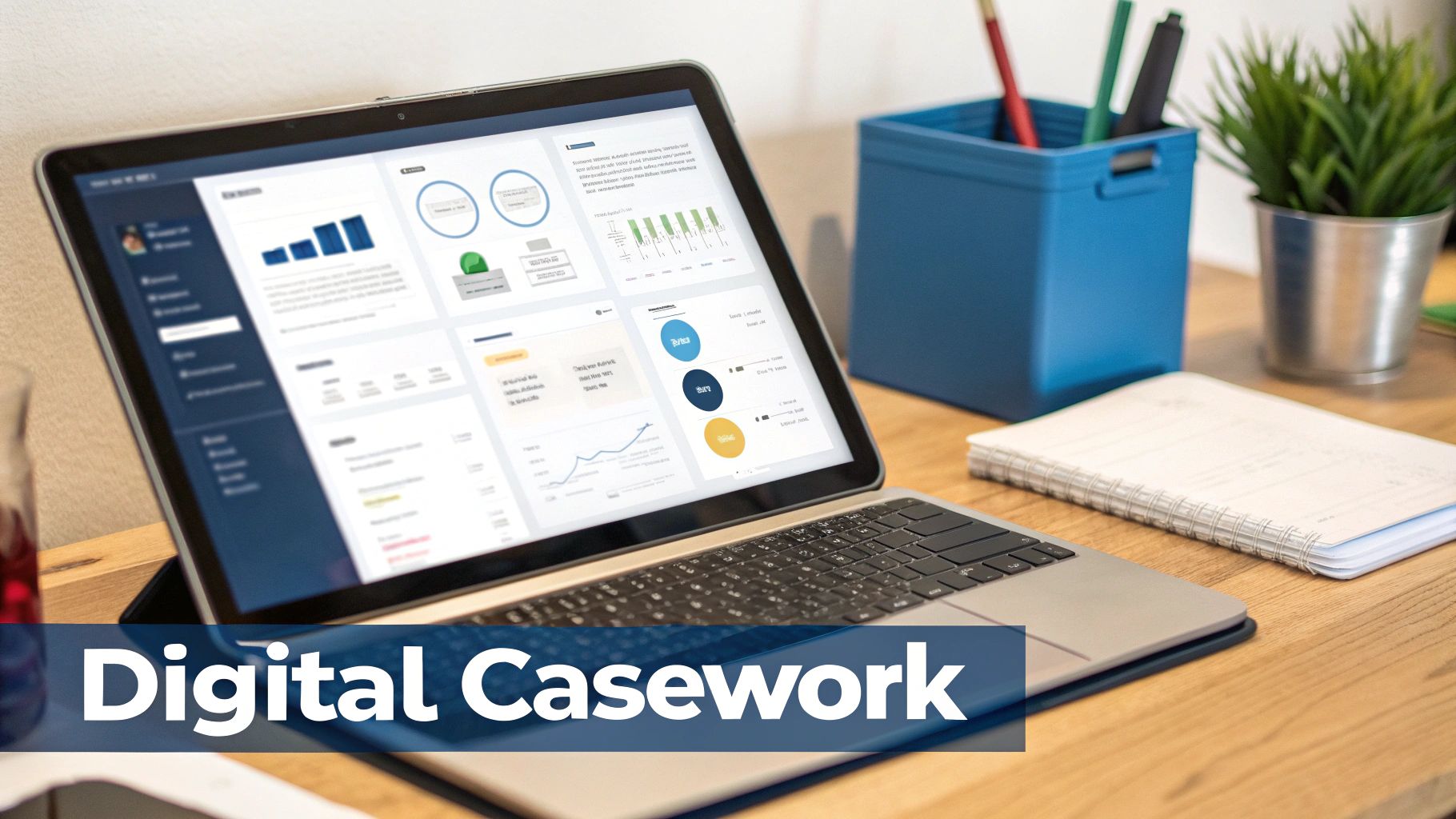
For example, a mental health provider can use a platform with secure messaging to maintain contact with clients between appointments, while a hospital system can deploy predictive analytics to identify patients at high risk for readmission. Similarly, community service organizations use mobile apps to coordinate field staff and track service delivery in real time. These technological integrations streamline operations and lead to more proactive and effective client care.
How to Implement Technology-Enabled Case Management
Adopting technology requires a thoughtful strategy to ensure it enhances, rather than complicates, existing workflows. The goal is seamless integration that supports both staff and clients.
- Select Integrated Systems: Choose software that integrates with your existing infrastructure to avoid data silos. A well-integrated system ensures a unified view of client information across all services. For advanced data input, exploring solutions like AI voice charting solutions can revolutionize documentation efficiency.
- Prioritize Security and Compliance: Ensure any platform is HIPAA compliant and uses robust data encryption to protect sensitive client information. Regularly audit systems for security vulnerabilities.
- Provide Comprehensive Training: Offer thorough training during and after implementation to ensure staff are confident and competent in using the new tools. Ongoing support is key to successful adoption.
- Optimize Your Technology: The initial setup is just the beginning. It's crucial to continuously refine your systems for peak performance; you can discover more about electronic health record optimization to ensure your technology evolves with your needs.
Key Insight: Technology should augment, not replace, the human element of case management. The best systems are those that free up a case manager's time from administrative tasks, allowing them to build stronger, more impactful relationships with their clients.
Case Management Best Practices: 10-Point Comparison
| Practice | Implementation Complexity (🔄) | Resource & Training Needs (⚡) | Expected Outcomes (📊) | Ideal Use Cases | Key Advantages (⭐) | Brief Tip (💡) |
|---|---|---|---|---|---|---|
| Individualized Care Planning | High — time‑intensive assessment & updates 🔄 | Moderate–High — trained case managers, coordination tools ⚡ | Client-centered outcomes, higher engagement ⭐⭐⭐⭐ | Mental health recovery, IEPs, hospital discharge, aging services | Aligns services to needs; reduces duplication ⭐⭐⭐⭐ | Conduct comprehensive bio‑psycho‑social assessments |
| Strengths‑Based Case Management | Medium — requires mindset shift and creativity 🔄 | Moderate — training in strengths approach, community mapping ⚡ | Increased motivation, self‑efficacy, sustainable gains ⭐⭐⭐⭐ | Recovery services, workforce development, youth mentoring | Builds resilience and leverages existing assets ⭐⭐⭐⭐ | Ask "What are you good at?" and celebrate small wins |
| Care Coordination & Integrated Services | High — cross‑agency systems and governance needed 🔄 | High — interoperable IT, staff time, formal protocols ⚡ | Reduced fragmentation, improved quality and cost savings ⭐⭐⭐⭐ | ACOs, integrated behavioral health, Housing First, HIEs | Streamlines services; fills gaps; improves transitions ⭐⭐⭐⭐ | Establish a single point of contact and shared metrics |
| Motivational Interviewing (MI) Techniques | Medium — skill development and practice required 🔄 | Moderate — extensive practitioner training and coaching ⚡ | Improved engagement and behavior change when skilled ⭐⭐⭐⭐ | Substance use, medication adherence, lifestyle change | Promotes intrinsic motivation and stronger alliance ⭐⭐⭐⭐ | Use OARS: Open questions, Affirmations, Reflections, Summaries |
| Risk & Protective Factor Assessment | Medium — structured but requires validated tools 🔄 | Moderate — training on instruments; periodic reassessment ⚡ | Better targeting of interventions; improved risk prediction ⭐⭐⭐ | Child welfare, suicide risk, juvenile justice, trauma screening | Guides prioritization and evidence‑based decision making ⭐⭐⭐ | Use validated tools and update assessments regularly |
| Active Monitoring & Outcomes Tracking | High — continuous data systems and workflows 🔄 | High — robust IT, staff capacity, measurement training ⚡ | Early gap detection; accountability; quality improvement ⭐⭐⭐⭐ | Housing retention, symptom tracking, readmission reduction | Enables data‑driven adjustments and demonstrable impact ⭐⭐⭐⭐ | Select 3–5 key outcomes and use brief validated measures |
| Cultural Competence & Humility | Medium — ongoing learning and organizational change 🔄 | Moderate — recurring training, interpreters, community links ⚡ | Improved trust, reduced disparities, better engagement ⭐⭐⭐⭐ | Refugee services, diverse community health, LGBTQ+ care | Enhances relevance and equity of services ⭐⭐⭐⭐ | Engage communities and practice regular self‑reflection |
| Family‑Centered & Kinship‑Based Practice | Medium — coordination with multiple family members 🔄 | Moderate — time for family meetings, consent management ⚡ | Greater sustainability, increased engagement and stability ⭐⭐⭐ | Kinship care, family preservation, wraparound services | Leverages natural supports; strengthens family resilience ⭐⭐⭐ | Map kinship networks and involve family with consent |
| Trauma‑Informed Case Management | High — policy, environment, and staff supports needed 🔄 | High — universal screening, staff training, supervision ⚡ | Reduced re‑traumatization; improved recovery outcomes ⭐⭐⭐⭐ | Domestic violence, veteran care, refugee resettlement | Creates safer services and supports healing ⭐⭐⭐⭐ | Implement universal trauma screening and staff self‑care |
| Technology‑Enabled Case Management | High — selection, integration, and security challenges 🔄 | High — upfront costs, training, ongoing IT maintenance ⚡ | Efficiency gains, real‑time tracking, scalability ⭐⭐⭐⭐ | Federally qualified centers, telehealth, analytics‑driven programs | Improves coordination, reduces admin burden, enables analytics ⭐⭐⭐⭐ | Ensure HIPAA compliance and include users in system design |
Elevating Your Practice with Smart Case Management
The journey through the ten essential case management best practices reveals a clear, compelling narrative: success in case management is not about isolated tactics but about building a holistic, integrated system. Moving beyond a reactive, task-based approach to a proactive, client-centered strategy is the fundamental shift that separates proficient teams from truly exceptional ones. Each practice we've explored, from Individualized Care Planning and Strengths-Based Approaches to Trauma-Informed Care and Cultural Humility, serves as a crucial pillar supporting this modern framework.
Implementing these strategies transforms the very nature of your work. It elevates the process from merely managing cases to orchestrating successful, sustainable outcomes for your clients. The core theme is a transition from administrative burden to strategic impact, empowering you to focus on the human element at the heart of every case.
Synthesizing Strategy into a Cohesive System
Adopting these principles individually will certainly yield improvements. You might see better client engagement from using Motivational Interviewing or more comprehensive support through better Care Coordination. However, the real, transformative power is unlocked when these practices are woven together into a unified operational philosophy.
Imagine a system where a client's strengths, identified in their initial assessment, are automatically factored into their care plan. Picture a workflow where trauma-informed principles are embedded in every communication template and risk factors are dynamically tracked with real-time alerts. This synergy is the pinnacle of effective case management. It creates a seamless experience for both the case manager and the client, reducing friction and ensuring that no critical detail falls through the cracks. This integrated approach ensures that the right hand always knows what the left hand is doing, creating a powerful, cohesive support network.
From Theory to Daily Practice: The Technology Bridge
The most significant barrier to implementing these case management best practices is often operational friction. How do you consistently apply ten different principles across a demanding caseload without getting bogged down in administrative tasks? The answer lies in leveraging the right technology. A platform designed to support these workflows is not just a convenience; it's a strategic necessity.
Effective technology acts as the central nervous system for your practice, operationalizing your commitment to excellence. It automates documentation, facilitates secure communication, and provides the data-driven insights needed for Active Monitoring and Outcomes Tracking. This is where the theoretical value of these best practices becomes a tangible reality in your day-to-day work. By removing manual bottlenecks, a smart platform frees up your most valuable resource: your time and expertise to focus directly on client needs.
This technological backbone ensures that your team isn't just aware of best practices; they are actively guided by them in every action they take. The principles move from a checklist in a training manual to the very fabric of your workflow, fostering a culture of continuous improvement and exceptional service delivery. Mastering these concepts is no longer an aspiration but a daily, achievable standard, leading to better outcomes for clients and a more sustainable, fulfilling practice for you and your team.
Ready to see how a unified platform can bring these case management best practices to life in your daily workflow? Discover how Whisperit centralizes your cases, automates documentation, and provides the AI-powered tools you need to deliver superior client outcomes with less effort. Explore the future of case management at Whisperit and transform your practice today.